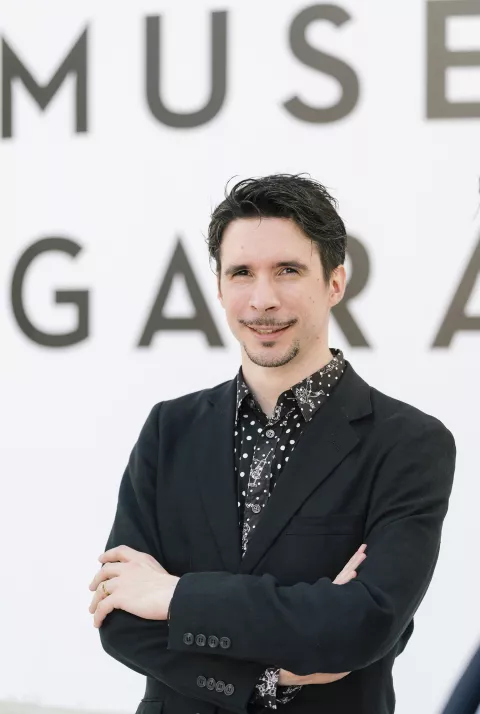
Nicolas Buffe
A French artist based in Tokyo, Nicolas Buffe is the creator of a multifaceted and multidisciplinary universe that blends highbrow and popular culture.
Born in 1978, he belongs to a generation naturally influenced by Japanese culture, developing a passion for anime, manga, and video games from childhood. During his studies, he added to these references with classical works from the Middle Ages, the Renaissance, and the Baroque period, such as Le Roman de la Rose and Le Songe de Poliphile.
This blend of narrative and visual influences is omnipresent in his work, which is based on the humanist notion of “serio ludere” or “playing seriously.” He presents his work in France and internationally through extraordinary exhibitions and installations, notably at the Maison Rouge (2007, Le Vestibule), the Museum of Contemporary Art in Tokyo (2008), MAD Paris (2010, Circuit Céramique), the Hara Museum of Contemporary Art in Tokyo (2014, solo exhibition), the Théâtre du Châtelet, and Nijo Castle - Kyoto (Nuit Blanche 2016), Hong Kong City Hall during French May, then Hong Kong K11 (2017, solo exhibitions), Sèvres: 300 Creative Years (2017-2018, Suntory Museum - Tokyo, then Osaka, Hagi, Shizuoka). Roppongi Art Night (2018, Tokyo) and Magiques Licornes at the Musée de Cluny (2018-19), as well as prestigious and varied collaborations (Hermès, Comme des Garçons, Maison Pierre Hermé, Sèvres, Mitsukoshi-Isetan, Craft Limoges, N2, Hankyu, Tsutaya). In 2010, he won the Grand Prix de la Cité Internationale de la Tapisserie et de l'Art Tissé d'Aubusson. Nicolas Buffe ventured into opera at the invitation of Jean-Luc Choplin and was twice commissioned by the Théâtre du Châtelet in Paris to design the costumes and sets for Haydn's Orlando Paladino (Critics' Union Prize 2012) and Mozart's Il Re Pastore (2015). He designed the stage curtain for the Seine Musicale on the theme of Orpheus (2017).
More recently, in Miami in 2018, he designed one of the five facades of the Museum Garage, Miami Design District (organized by Terence Riley, with Work AC; J. Mayer H.; Clavel Aarquitectos; K/R; 11 national and international awards) and in the winter of 2018-2019, he deployed a monumental installation inside Ginza Six - Tokyo. His first collaboration with Sèvres dates back to 2016, when he was invited to participate in an exceptional firing of the factory's largest wood-fired kiln, dating from the 19th century.
He has been collaborating with the MiniMasterpiece gallery since 2019.
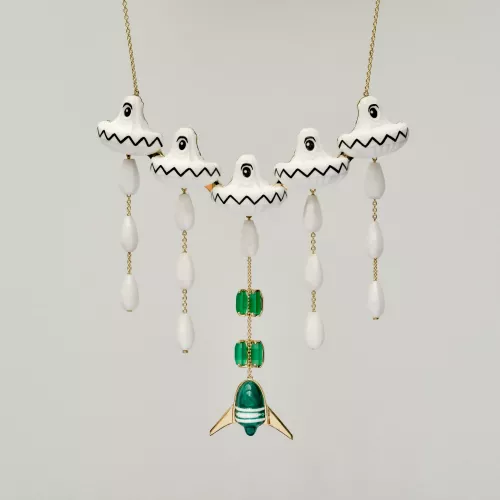
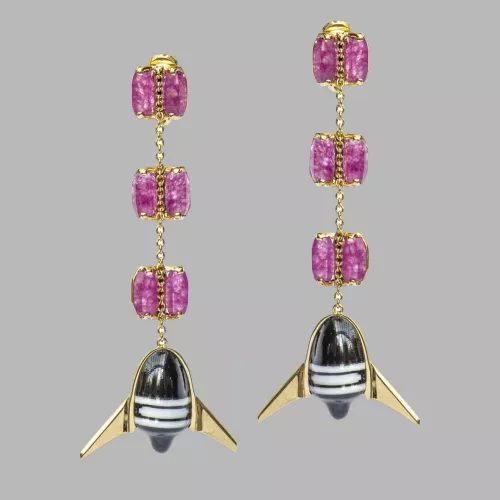
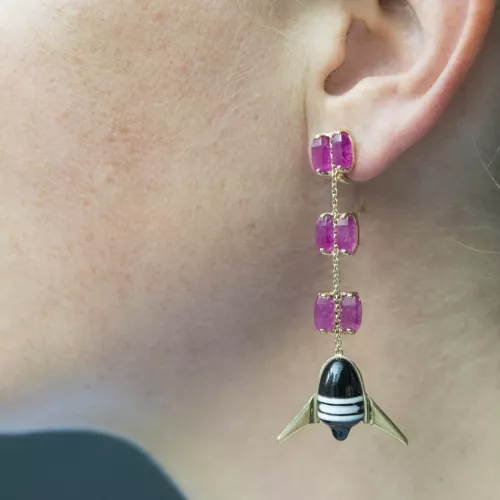
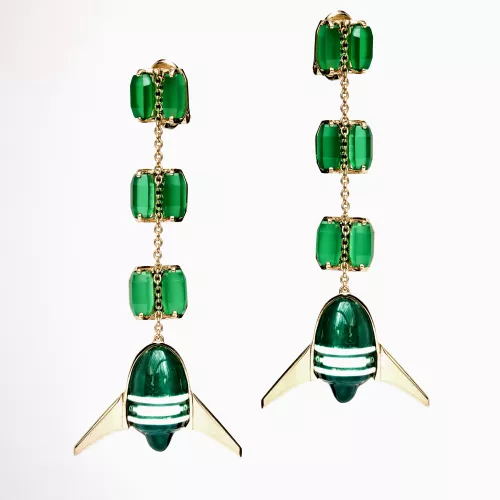
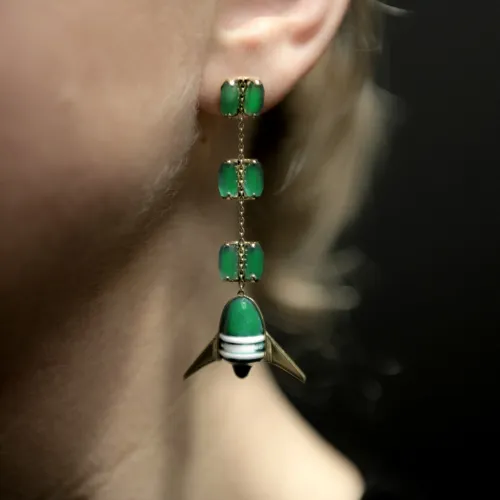
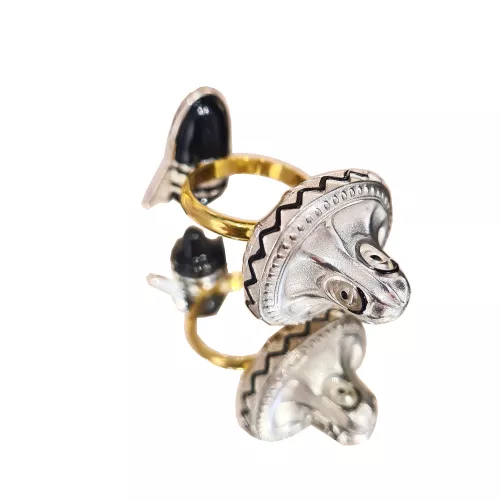
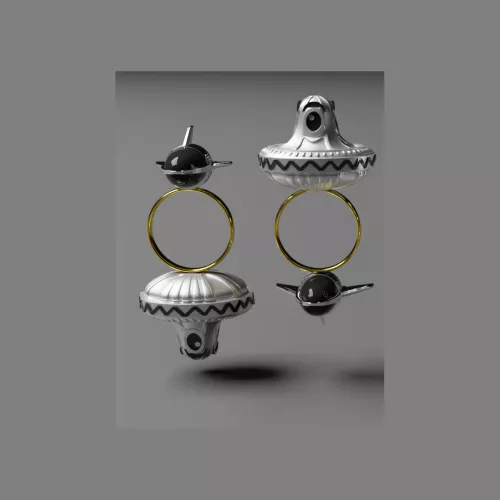
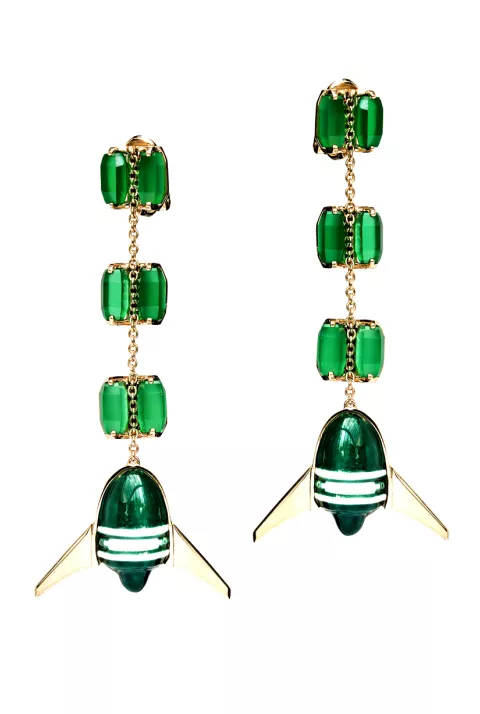
The idea for the “Shoot'em up” jewelry collection—a joint Sèvres/MiniMasterpiece edition—came from the combination of two worlds that might seem opposed at first glance. On the one hand, the Manufacture de Sèvres, emblem of the prestigious history of French porcelain since the 18th century, but also of a certain idea of refinement and fragility. On the other hand, Shoot'em up, which, as its name suggests, is a frenetic action video game in which the goal is to eliminate enemies from outer space that appear in ever-increasing numbers on the screen.
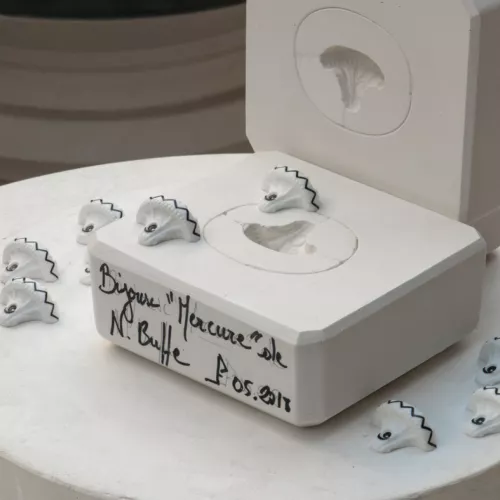
Buffe transformed the Mercure potpourri vase into “Invader from Mercury” and the 1776 Star Vase into “Starship Defender.”
As for the laser beams exchanged between the ships, the parallel with the luminosity and brilliance of the stones was obvious.
The refinement of Sèvres biscuits is echoed in the miniature animated ships on the screen of an arcade machine.