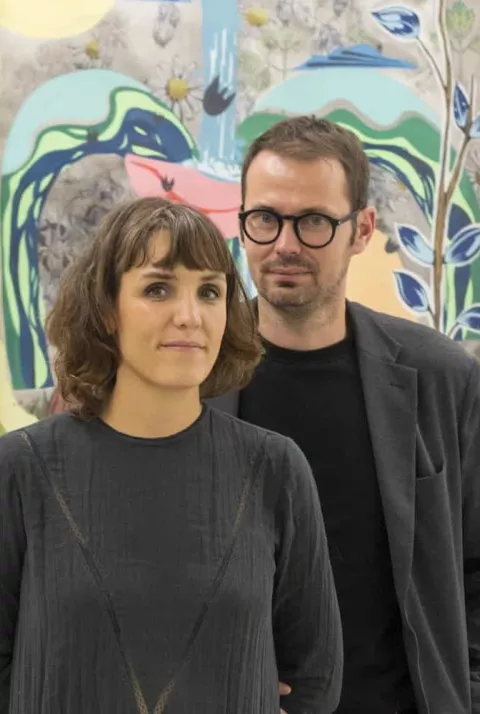
Alexandre et Florentine Lamarche-Ovize
Alexandre & Florentine Lamarche-Ovize were born in 1980 in Le Coteau (France) and in 1978 in Rosenheim (Germany).
They live and work in Bobigny (France).
Since 2006, the artist duo Lamarche & Ovize have been developing a hybrid practice in which drawing plays a central role. Influenced by comic books, classical painting, and decorative arts, their sketchbooks become the blueprints for rich environments, where lines extend into volume, installation, photography, or sculpture. Their work, conceived as a continuous flow, questions the links between art, craftsmanship, and everyday life.
Their work has been the subject of numerous solo exhibitions: Musée des Beaux-Arts de la Chaux-de-Fonds, Switzerland, Frac Normandie Caen, 2020, Drawinglab, Paris 2019, Galerie Lefebvre&fils, Paris, 2019, Galerie G-N Vallois, 2017, Galerie Luis Adelantado, Valencia 2017, the Parc Saint Léger art center, 2017, the Grand Café Saint Nazaire, 2017, and others. They have been artists-in-residence at the Drawing Center, New York (2016-2017), and at José Noé Suro, Guadalajara, Mexico (2015). Their works are included in the collections of the CNAP, Frac Pays de la Loire, Cité de la Céramique in Sèvres, Fonds Départemental de la Seine Saint Denis, Frac Midi Pyrénées, and several art libraries.
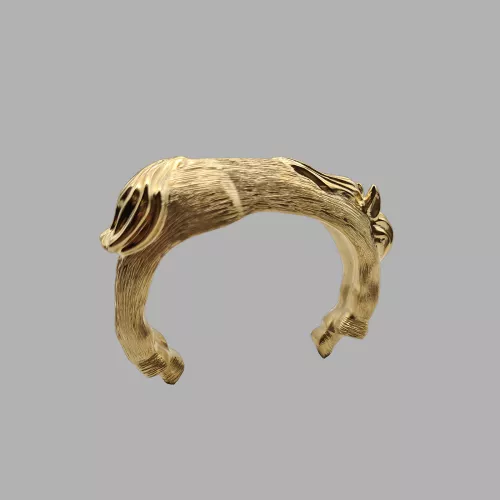
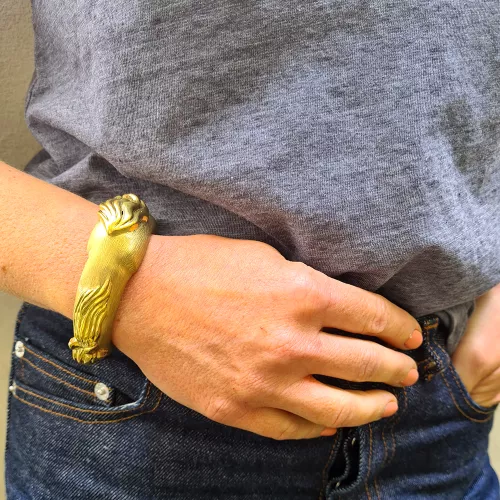
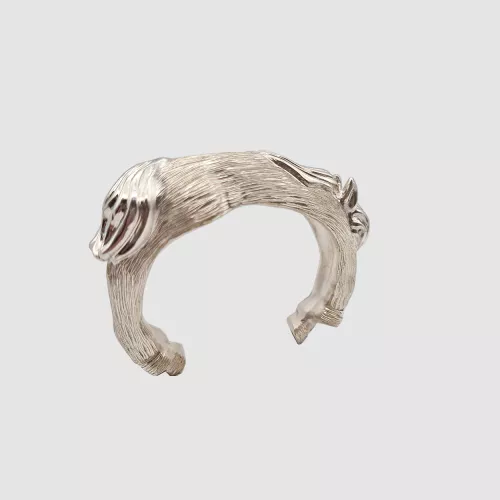
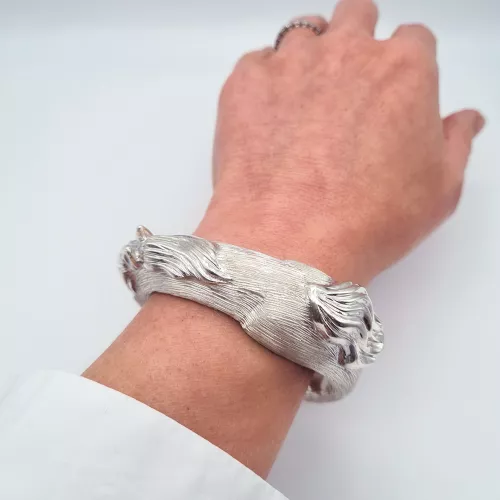
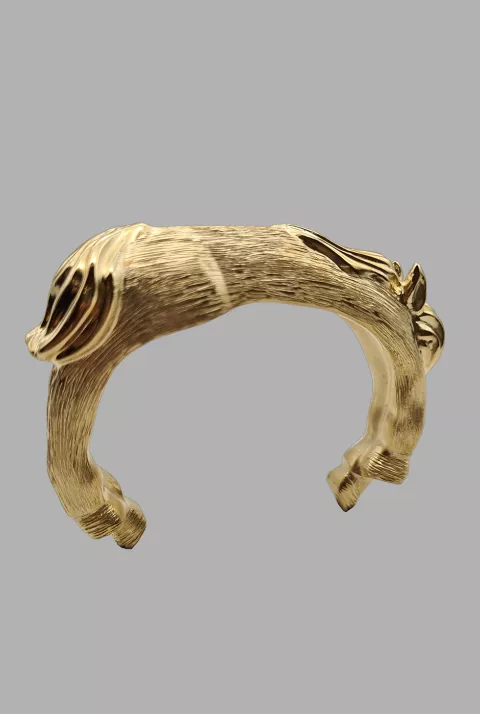
For their first collaboration with the MiniMastepiece gallery in 2022, they created the “Orobas” bracelet.
A bangle that looks like a sculpture based on a drawing of a quarter horse. This is a small horse known for its sand-kicking antics. The bangle is reminiscent of the prehistoric drawings that adorn cave walls and were illuminated by candlelight. The horse hugs the wrist and, with its silver or gold reflections, recalls this ancient flame. Since the dawn of time, horses have had a close relationship with humans. Orobas illustrates this relationship; he is the demon-horse captain of the underworld, capable of taking human form. With its circular shape, the bangle echoes these ancestral myths between day and night and life and death as a continuous circle.