Phillip King
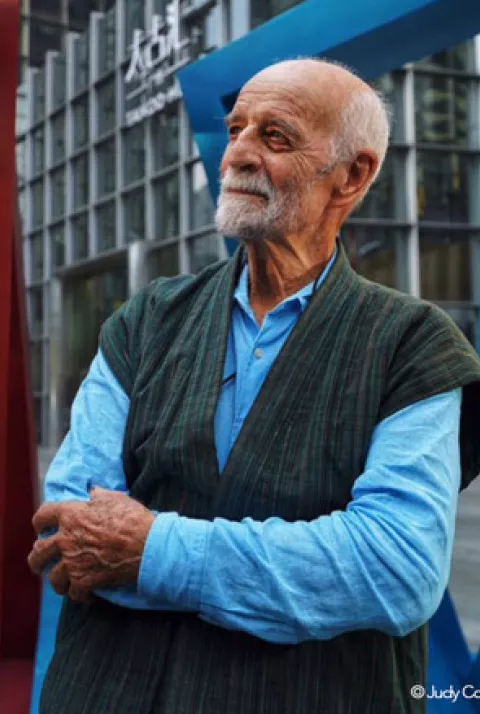
Born in Tunis in 1934, Phillip King is a British sculptor whose work is defined by the richness and variety of forms and materials. Alongside Anthony Caro, Richard Long, and Barry Flanagan, he is considered one of the inventors of modern English sculpture from the early 1960s onwards.
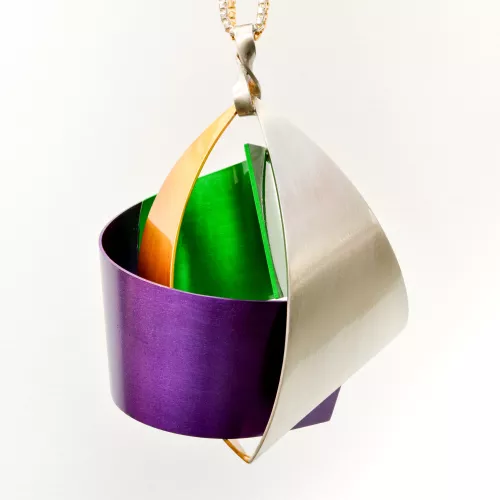
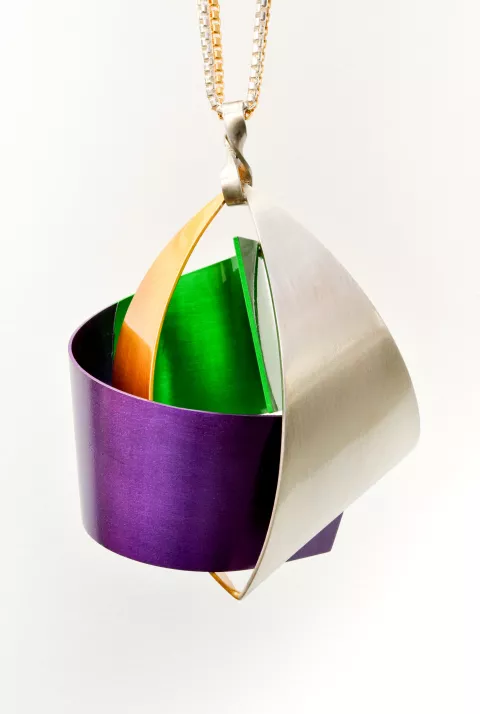
A former assistant to Henry Moore, in 1962 he began experimenting with materials not typically associated with abstract art, combining them with each other or with found industrial objects. From then on, King dared to use very bright colors (acid greens and electric blues, orange and pure yellow) in a period that was generally averse to color. Color thus occupies a fundamental place in his work, almost a material in itself and like a fourth dimension. King's works have all the qualities of sculpture: weight, mass, balance, volume... His work is focused on a concept of weight, gravity, and the means available to overcome them. It is through color that he finds the means to elevate the material. Color punctuates and gives rhythm to volumes. It disrupts the information about the material.
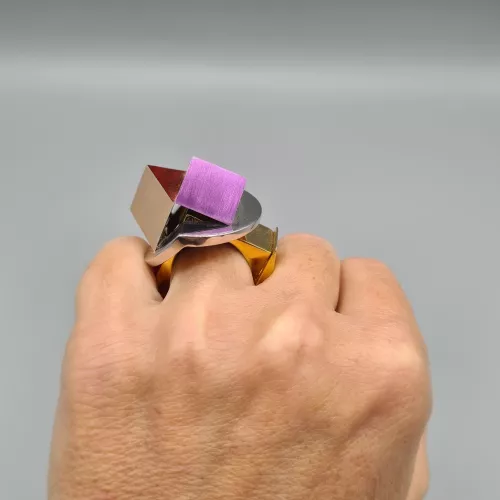
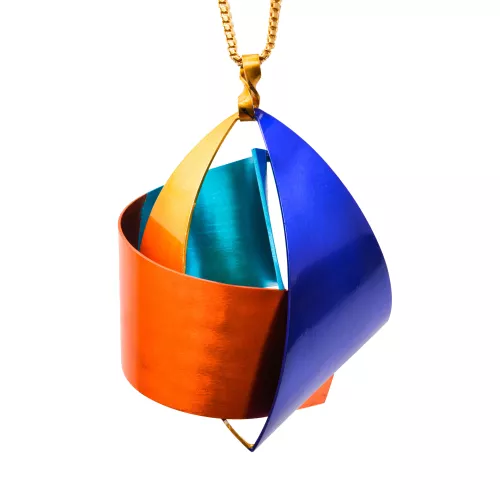
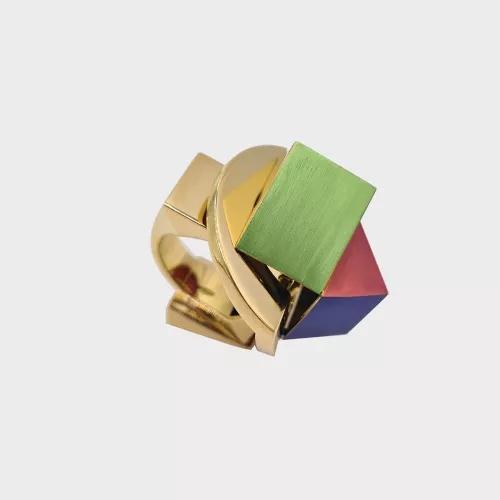
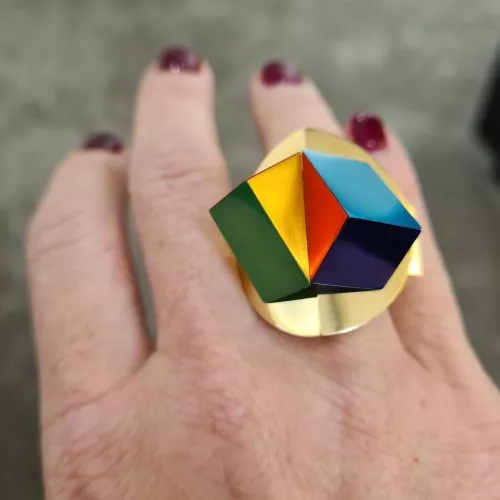
From 2016 onwards, King approached the question of wearable sculpture through the same prism of elevation—until his death in July 2021. For MiniMasterpiece, he designed two iconic pieces of jewelry: the Liaisons amoureuses pendant and the Moon Halo / Rayon vert ring. The latter is also the artist's very last three-dimensional work.
Phillip King's work is represented by the Thomas Dane (London), Luhring Augustine (New York), and Ceysson & Bénétière galleries. His works are part of numerous private and public collections around the world (including Tate Britain – London, MoMA – New York, Centre Pompidou – Paris, MOCA – Los Angeles, Rijksmuseum – Amsterdam, Royal Academy of Arts – London, Tel Aviv Museum of Art, Berardo Museum – Lisbon).